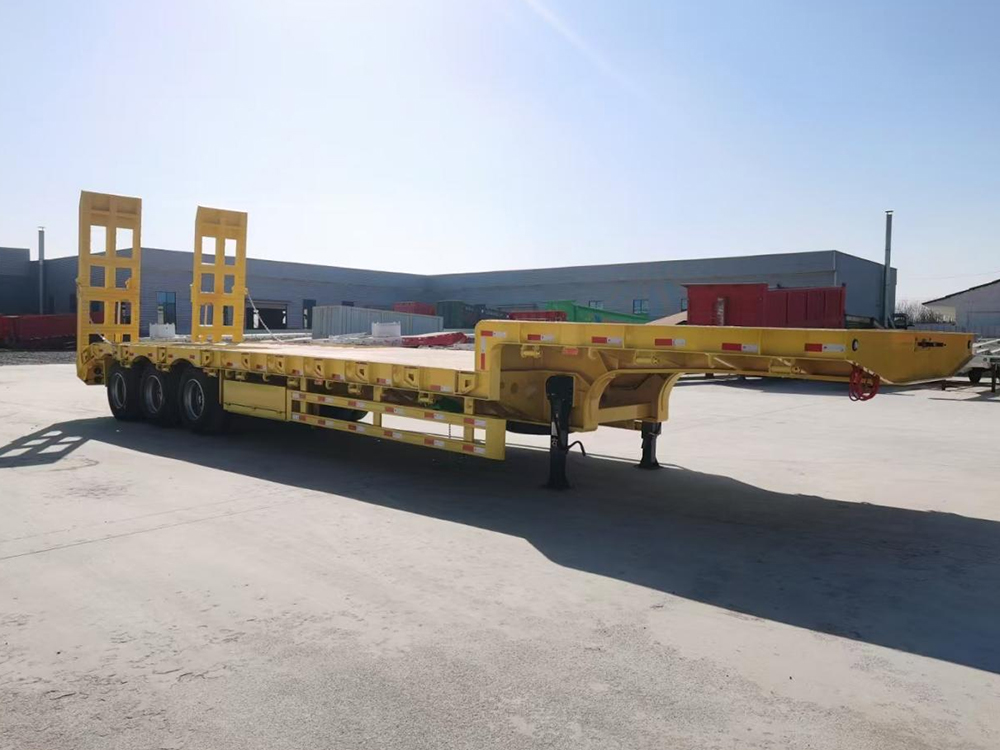
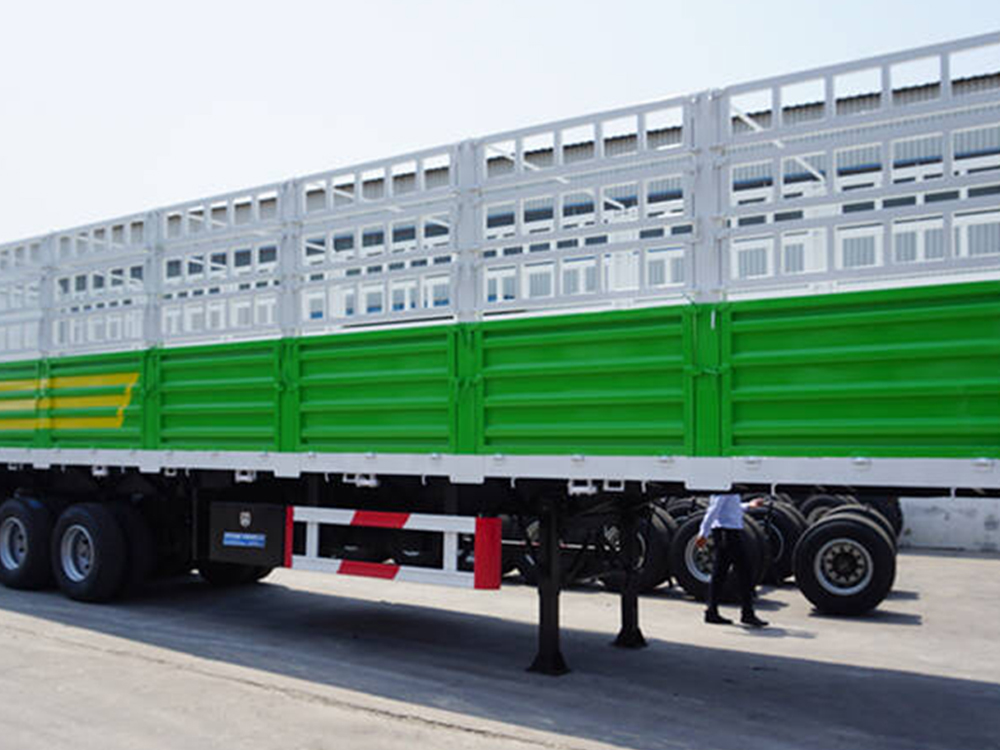
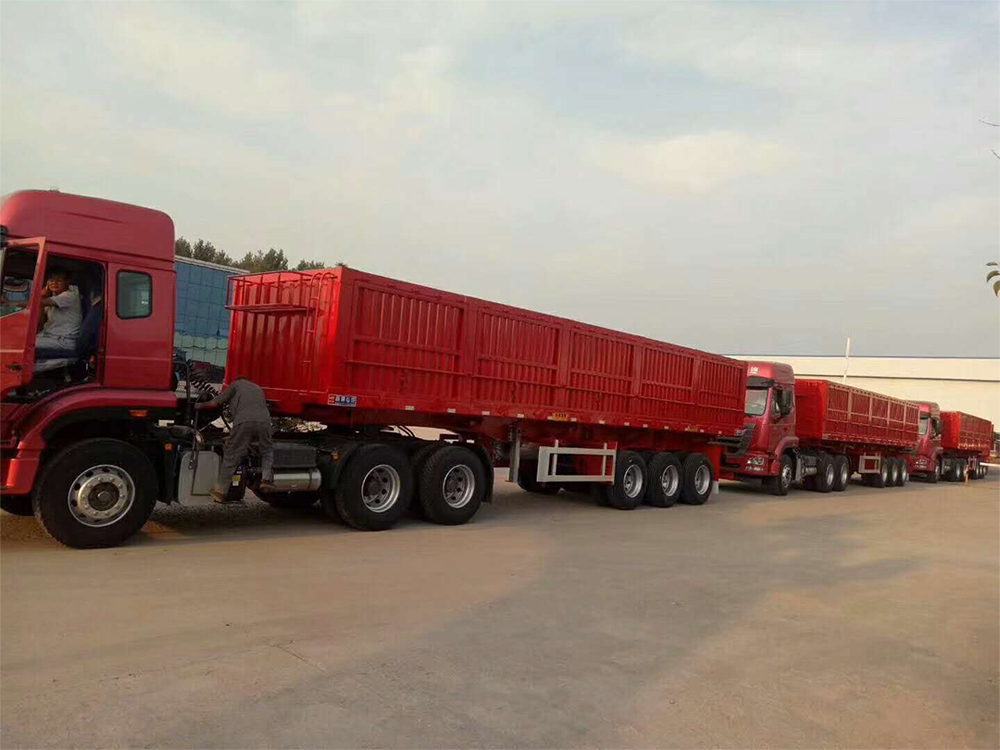
In the field of road freight, semi-trailers and full trailers are two widely used vehicle types, yet they are often confused by industry practitioners. Their core differences lie in the connection form with the tractor unit and the load-bearing mechanism: semi-trailers are equipped with wheels only at the rear, with the front end connected to the tractor’s fifth wheel via a kingpin, and part of their weight is borne by the tractor; full trailers, on the other hand, have a complete frame and an independent running system, connected to the tractor through a hitch, with their entire weight borne by themselves.
According to domestic road freight data in Q1 2025, the market share of semi-trailers reached as high as 68%, while that of full trailers was only 12%. Behind this significant gap are the notable differences between the two in terms of transportation efficiency and flexibility.
Combined with the latest industry cases in 2025, this article analyzes the two types from dimensions such as structural characteristics, driving control, and compliant applications, helping industry practitioners quickly clarify their differences and accurately match transportation scenarios.
Structural essence: The way of connection and bearing determines the core differences
(1) Semi-trailer: A “semi-attached structure” supported by a tractor unit.
The frame of the semi-trailer is designed in an “L” shape, with no wheels at the front end. It forms a stable connection point with the tractor’s fifth wheel through a high-strength traction pin with a diameter of 50mm or 90mm, enabling 30%-50% of the weight at the front of the trailer to be transferred to the tractor, thus forming an integrated stress system.
Take the common 40-foot container semi-trailer as an example. The total length of the vehicle is approximately 13.7 meters, with only 2 sets (4-6) of wheels configured at the rear, which are connected to the frame via air suspension or leaf springs. The kingpin seat at the front end of the frame, as a core load-bearing component, is forged from high-strength alloy steel with a tensile strength of over 800MPa, capable of withstanding several tons of vertical pressure and horizontal tension. Due to the integrated design of the cargo compartment and the frame, the semi-trailer cannot be parked independently without the tractor and needs to rely on outriggers to support the weight of the front end. The 2025 new models have generally adopted electric outriggers, reducing the retraction time from the traditional manual 3 minutes to 30 seconds, which significantly improves the loading and unloading turnover efficiency.
II. Driving Control: Significant Differences in Flexibility and Operation Difficulty
After a semi-trailer is connected to a tractor, it forms a straight-line structure like the Chinese character “一”. When turning, steering is achieved through the relative rotation at the fifth wheel. Taking a 13-meter semi-trailer as an example, its minimum turning radius is approximately 8-10 meters, which is 30% smaller than that of a full trailer of the same length. It is more flexible in narrow scenarios such as urban roads or factory premises.
However, the reversing logic of a semi-trailer is opposite to the direction of the steering wheel operation, which is a major operational difficulty for new drivers: when the steering wheel is turned to the left, the rear of the trailer will swing to the right, requiring repeated practice to establish a “reverse thinking”. To address this pain point, in 2025, some logistics companies equipped their semi-trailer tractors with a “reversing assist system”. By means of cameras and algorithms, the reversing trajectory is displayed on the central control screen, shortening the time for new drivers to master the skill proficiently from 3 months to 1 month.
In terms of driving stability, since part of the weight of the semi-trailer is borne by the tractor, it is less affected by crosswinds when driving at high speeds. In an environment with a wind speed of 10m/s, the lateral deflection of the semi-trailer body is only half that of a full trailer, giving it a greater advantage in driving safety.
The difference between semi-trailers and full trailers stems from their structural design, which in turn affects maneuverability, load-carrying capacity, and applicable scenarios: semi-trailers are flexible and efficient, suitable for long-distance heavy cargo transportation; full trailers have a large capacity, suitable for short-distance light cargo or combined transportation. The choices in the 2025 transportation market have also confirmed this – semi-trailers dominate long-distance trunk lines, while full trailers focus on short-distance scenarios.
For freight industry practitioners, when making a choice, they need to consider factors such as transportation routes (long-distance/short-distance), cargo types (heavy goods/light goods), and road conditions (urban/mining areas), rather than simply comparing “good” or “bad”. With the new regulations imposing strict requirements on dimensions and safety, whether it is a semi-trailer or a full trailer, compliant operation is the way to go for the long term. Understanding the differences between the two can not only help you quickly identify vehicle types but also provide a scientific basis for freight decision-making.